
Lithium Battery Fire Safety for Boaters: What You Need to Know
We’ve seen a growing number of boats equipped with lithium batteries, and we want to help boat owners be prepared in the event of a lithium battery fire. Lithium battery fires behave differently from typical fires due to their internal design, so understanding the basics and taking precautions is essential for safety on the water.
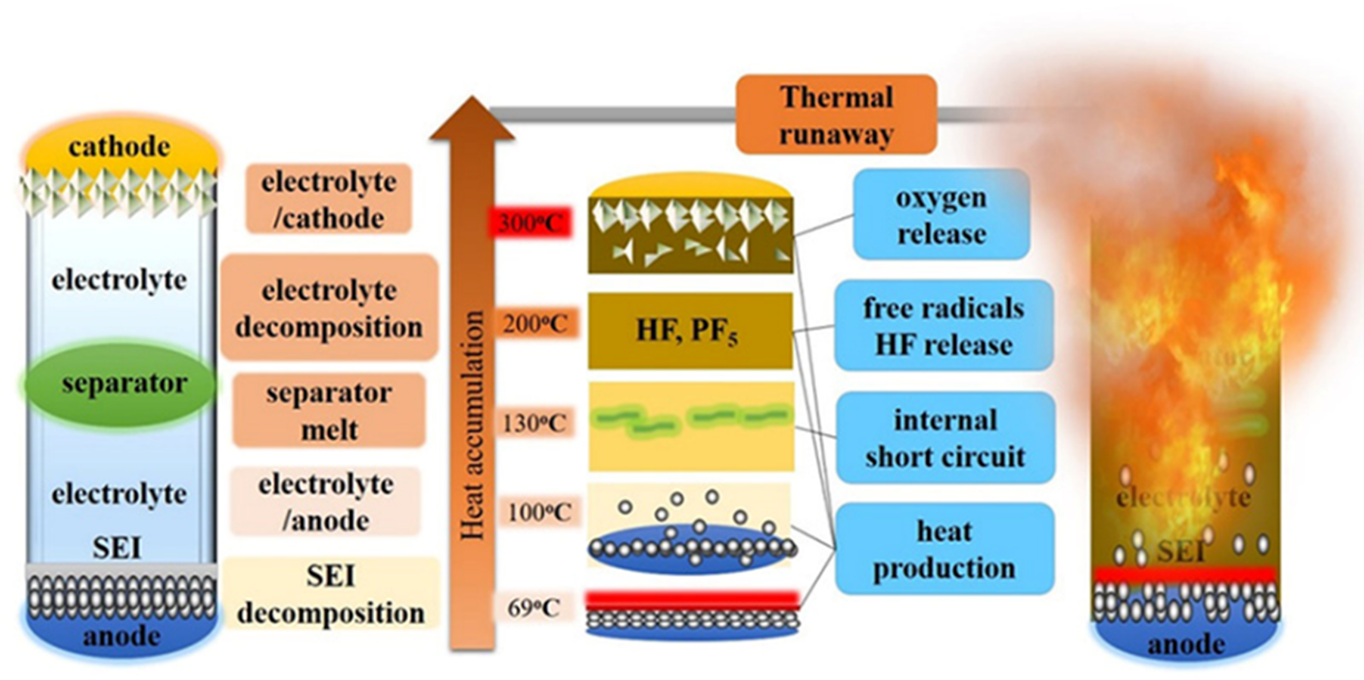
Thermal runaway occurs when a lithium battery begins producing heat faster than it can cool, potentially leading to fire or gas venting.
Lithium battery fires often start with a process called thermal runaway.
In simple terms, the battery begins producing heat faster than it can cool itself. Once this happens, the heat can trigger a chain reaction inside the battery.
What may occur during thermal runaway:
The battery temperature rises
Internal materials begin to break down
Flammable gases may be released
The battery can ignite or vent flames
Researchers describe thermal runaway as a process where overheating leads to gas release and eventually combustion if the reaction continues (researchgate.net).
Key takeaway for boaters: Once thermal runaway begins, a lithium fire can escalate quickly, which is why early detection and preparedness are critical.
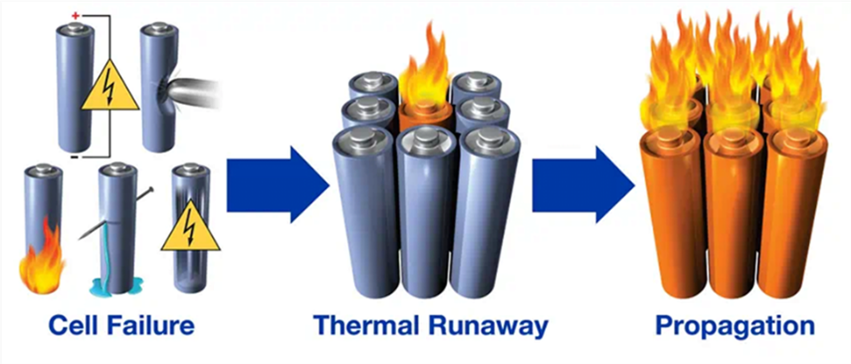
When one battery in a bank overheats, it can trigger neighboring cells, creating a rapid fire escalation.
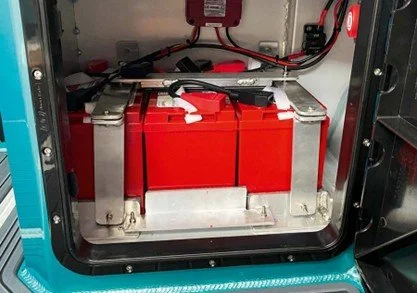
Bank of lithium batteries
Many boats that use lithium power systems have multiple batteries connected together in a battery bank.
If one battery overheats and goes into thermal runaway, the heat can spread to nearby batteries. This can create a domino effect, where several batteries begin failing in sequence.
During this process:
Batteries may vent hot gases or flames
Heat can ignite neighboring cells
The fire may grow quickly as additional batteries react
This chain reaction explains why lithium battery fires can become intense very quickly. On a boat, having a plan and the right equipment can make all the difference.
Lithium Fire Safety Items Every Boat Should Carry
Lithium batteries are efficient and increasingly common on boats. Like any onboard power system, they require thoughtful safety planning. Having the right equipment can allow a safe and quick response if a battery incident occurs.
1. Fire Blanket

A fire blanket can smother flames or provide a temporary shield while exiting a vessel.
Smother small fires
Provide a temporary shield while exiting
Cover a burning device to reduce oxygen and flame spread
Tip: Keep it in a visible, easy-to-reach location near battery areas or exit paths.
2. Multiple Fire Extinguishers
Use properly rated marine extinguishers. Note- there is no extinguishing agent designed for lithium fires.
Having more than one provides options if a fire starts
Extinguishers can slow the fire, giving you time to escape.
3. Heat and Smoke Detectors
Install detectors in battery compartments, cabins, and engine spaces
Early detection can alert occupants before a fire grows
4. Battery Monitoring System
Monitors temperature, voltage, and charging performance
Alerts boat owners to irregular conditions that may indicate a problem
5. Emergency Communication Equipment
Marine VHF radio
Emergency locator beacon
Charged handheld backup radio
6. Personal Protective Gear
Heat-resistant gloves
Eye protection
Flashlight or headlamp
7. Battery Storage Cases
Store portable lithium batteries in protective, non-conductive containers
Reduces risk of physical damage, short circuits, or accidental activation
8. Ventilated Battery Compartments
Proper ventilation reduces flammable gas buildup
Lowers temperatures in enclosed spaces
Improves overall battery safety
9. Emergency Escape Planning
Post a simple onboard safety plan
Owners should be aware of ion batteries of any size that are on board at all times.
Ensure everyone onboard knows where safety gear is located and how to exit quickly
Include life jacket locations
10. Well-Maintained Electrical System
Inspect battery connections, wiring, and insulation
Check charging equipment regularly
Keeping systems in good condition is one of the most effective ways to reduce fire risk
Lithium battery technology is becoming more common in marine applications. With it comes the need for thoughtful preparation and awareness.
Equipping vessels with the right tools and ensuring everyone onboard knows emergency procedures can significantly improve your ability to respond to unexpected incidents. On boats, preparedness and awareness are important elements of lithium fire safety.